Confessions II: Madonna Wants Back In On The Dance Floor
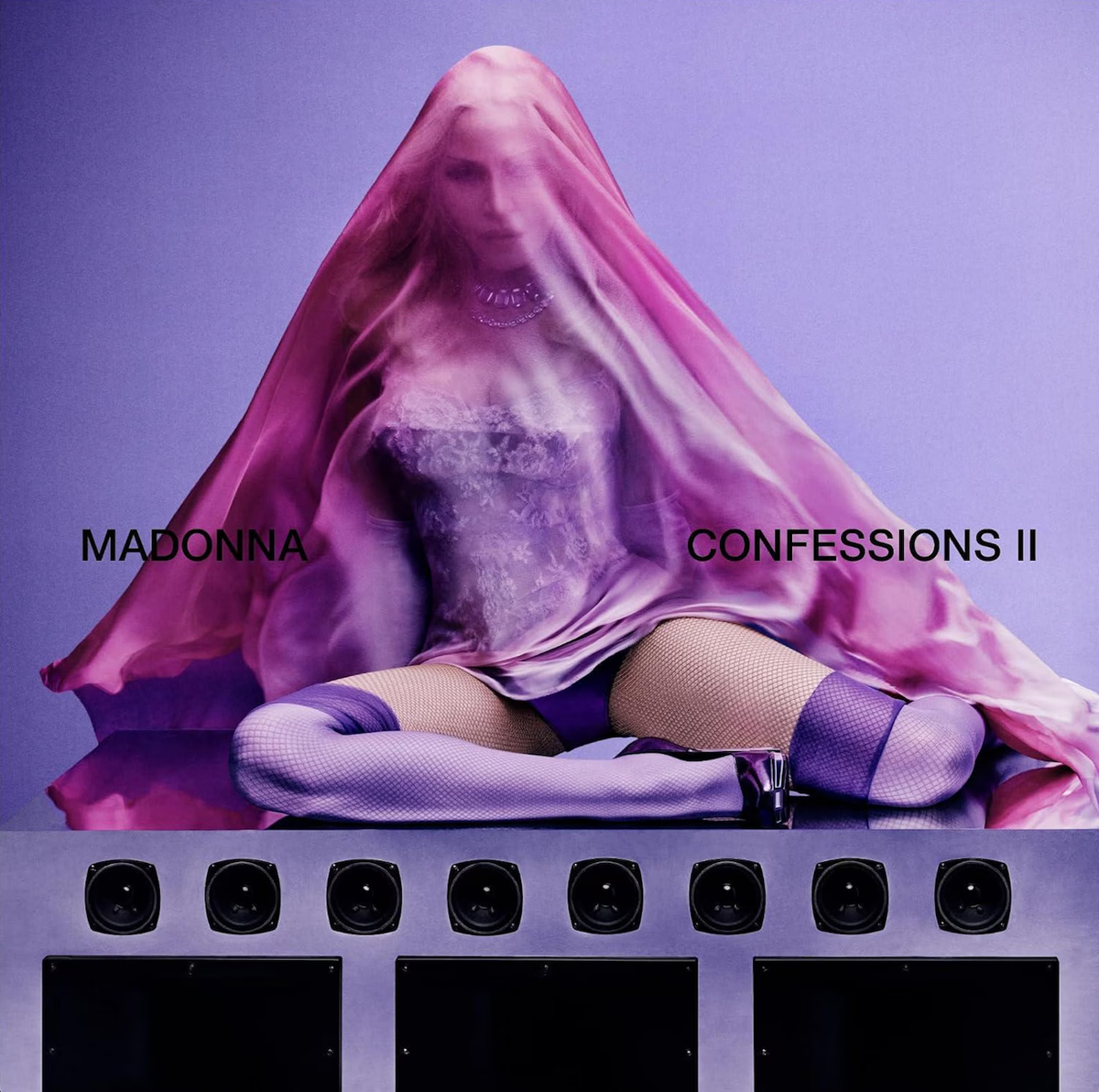
Twenty-one years after "Hung Up" was the lead single off of Madonna's Confessions on a Dance Floor which was deemed her comeback album, she is back on the floor. Confessions II, out now on Warner and reunited with original architect Stuart Price, is a 15-track continuous mix of a realm of different styles of dance music from acid house to Detroit techno.
Tracks like "I Feel So Free" opens on a Lil Louis "French Kiss" flip, and the Sabrina Carpenter duet "Bring Your Love" rides a Detroit techno pulse lifted straight from Inner City's "Good Life". Madonna is no stranger to using samples to bring back a familiar sound that's reinvented. Confessions II is dance music made by someone explaining dance music to you. Nearly every track comes wrapped in a spoken-word thesis statement about the dance floor as "a threshold," "a ritual space," a site of transcendence, and any other word you can describe a dance floor. The original Confessions got away with disco-as-philosophy because the grooves did the talking.
In the second half of the album, "Fragile," an elegy to her late brother, dissolves into liquid drum 'n' bass in a way that's genuinely disarming, while "School" digs into something closer to actual subterranean techno grit than anything else on the tracklist. Confessions II is Madonna's most focused pop record in twenty years, and it's a legitimately well-sequenced dance album. The album's continuous-mix structure alone puts more care into the floor experience than most of "dance-inspired" pop music that has been put out this year. Madonna will always be one of the most significant pop artists of all time and she has done her homework on this one. Whether that's a compliment depends entirely on how tired you are of house music's aesthetics getting borrowed as vibes rather than lived in as culture. That's for anyone to decide.
Sound off: Is this the closest mainstream pop has gotten to actually understanding the floor, or just the most well-produced version of the same old borrowing?